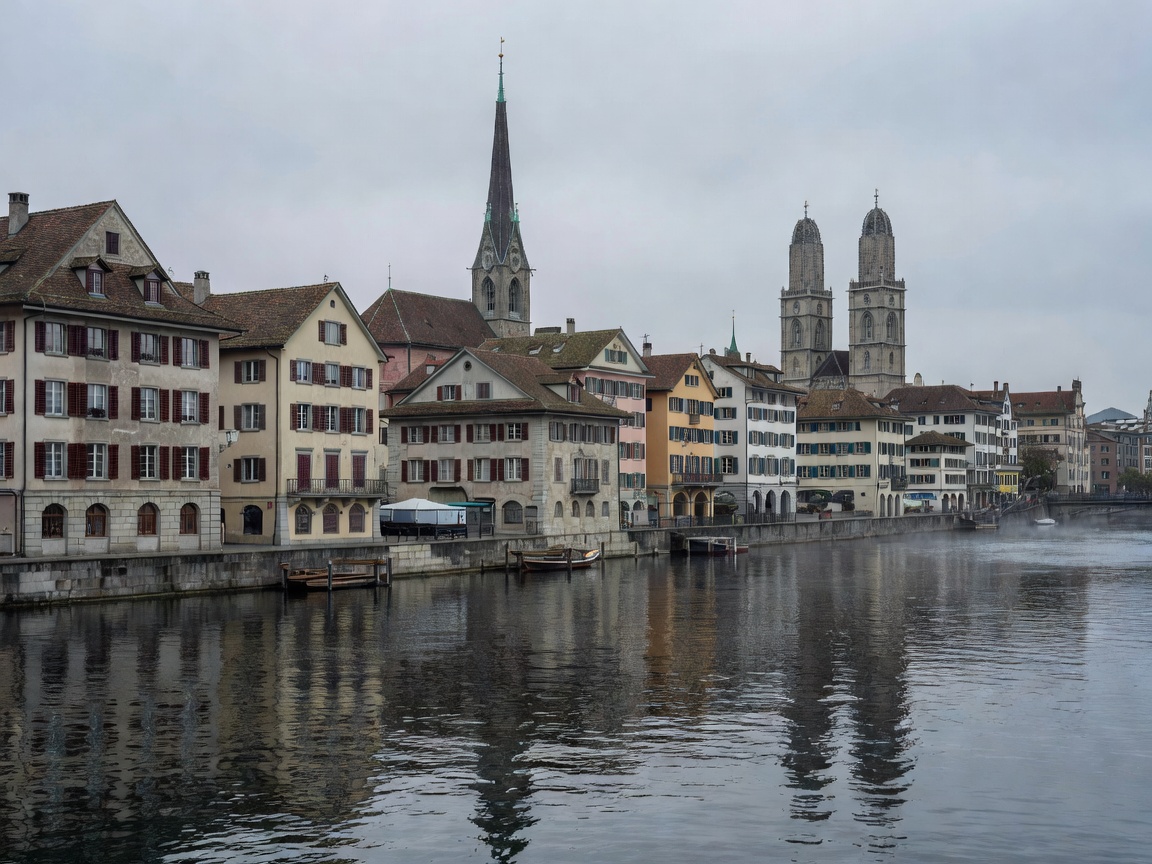
1. The Topography of Old Town (Altstadt)
Divided by the shimmering Limmat river, Zurich's historic core unfolds into narrow cobblestone alleyways that date back to Roman times (Turicum). The west bank features Lindenhof hill, an ancient elevated plaza where locals play outdoor chess beneath linden trees while overlooking the iconic twin spires of the Grossmünster cathedral.
Crossing the Münsterbrücke, travelers reach the Fraumünster church, celebrated for its five monumental stained-glass windows created by Marc Chagall in 1970. Each window depicts biblical narratives rendered in luminous blues, greens, and vibrant alpine reds.
Field Recommendation: 48-Hour Zurich Blueprint
Morning: Coffee at Café Schober in Niederdorf, followed by an architectural stroll along Augustinergasse.
Afternoon: Steamboat cruise on Lake Zurich from Bürkliplatz toward Rapperswil, followed by modern art at Kunsthaus Zurich.
Evening: Fresh perch fillets and local Pinot Noir along the Sechseläutenplatz promenade.
2. Lake Zurich & The Historic "Badis"
In summertime, Zurich transforms into an open-air aquatic culture. The city's legendary "Badis"—wooden bathing pavilions situated directly on the lake and river—have welcomed swimmers since the 19th century. Frauenbad Stadthausquai and the historic Flussbad Oberer Letten offer refreshing crystal-clear waters sourced from the melting alpine snowpacks further south.
3. The High-Speed Gateway to the Alps
Zurich HB is Europe's premier railway interchange. High-speed double-decker Swiss Federal Railways (SBB) InterCity trains depart every 30 minutes, rocketing visitors to Lucerne in 41 minutes, Interlaken in under 2 hours, or south to the Italian-speaking canton of Ticino via the 57km Gotthard Base Tunnel.